
The clock is ticking. By December 31, 2027, major retailers across the United States and globally will require the ability to scan and process 2D barcodes — including GS1 Digital Link QR codes — at point of sale. For brand owners, importers, and packaging teams, this isn’t a distant IT project. It’s a cross-functional business transformation that touches marketing, supply chain, operations, regulatory affairs, and technology all at once.

If your team is beginning this journey in early to mid-2026, you have roughly 12 to 18 months of runway before the primary deadline. That sounds like plenty of time. It isn’t — and brands that have already started are discovering why.
What GS1 Sunrise 2027 Actually Requires
GS1 Sunrise 2027 is the industry’s coordinated transition away from the traditional 1D UPC/EAN barcode toward 2D symbologies capable of carrying far more structured data. At minimum, the new GS1 Digital Link QR code must encode a product’s Global Trade Item Number (GTIN) as a standards-compliant web address — for example, https://resolver.GTIN.cloud/01/09780201379624.
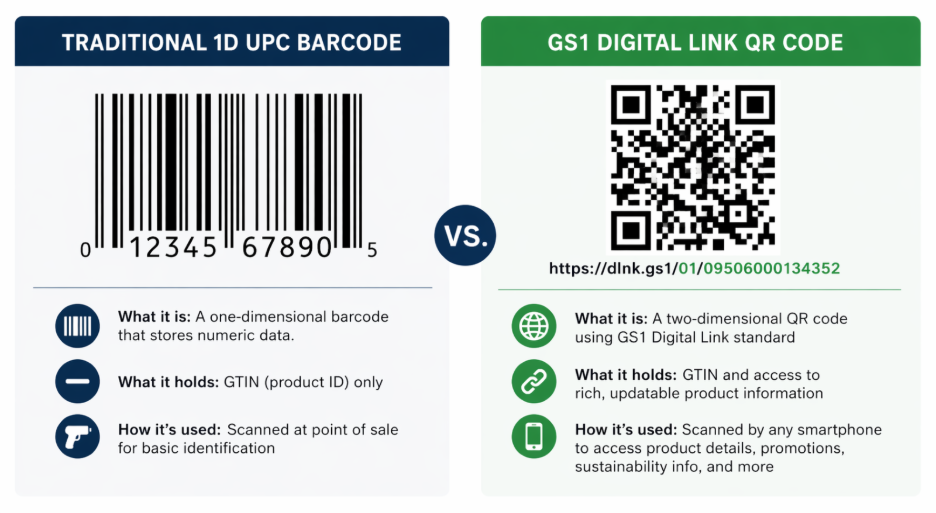
That URL is a structured digital bridge connecting the physical product to a resolver that routes different users — consumers, retail POS systems, supply chain partners, and regulators — to exactly the information they need using the same barcode. This is the shift our “GS1 Digital Link Mastery” online course was built to explain: as Module 1 makes clear, GS1 Digital Link is a foundational change to how product data moves through commerce.
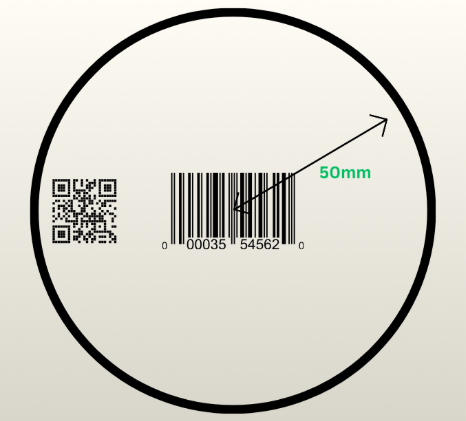
Since both the 1D and 2D codes will need to coexist on packaging during the transition period (as not all retailers will be ready simultaneously), brands also need to understand the placement rules — including the critical 50 mm proximity requirement that prevents double-ringing at checkout.
The GTIN Audit: The Right Place to Start
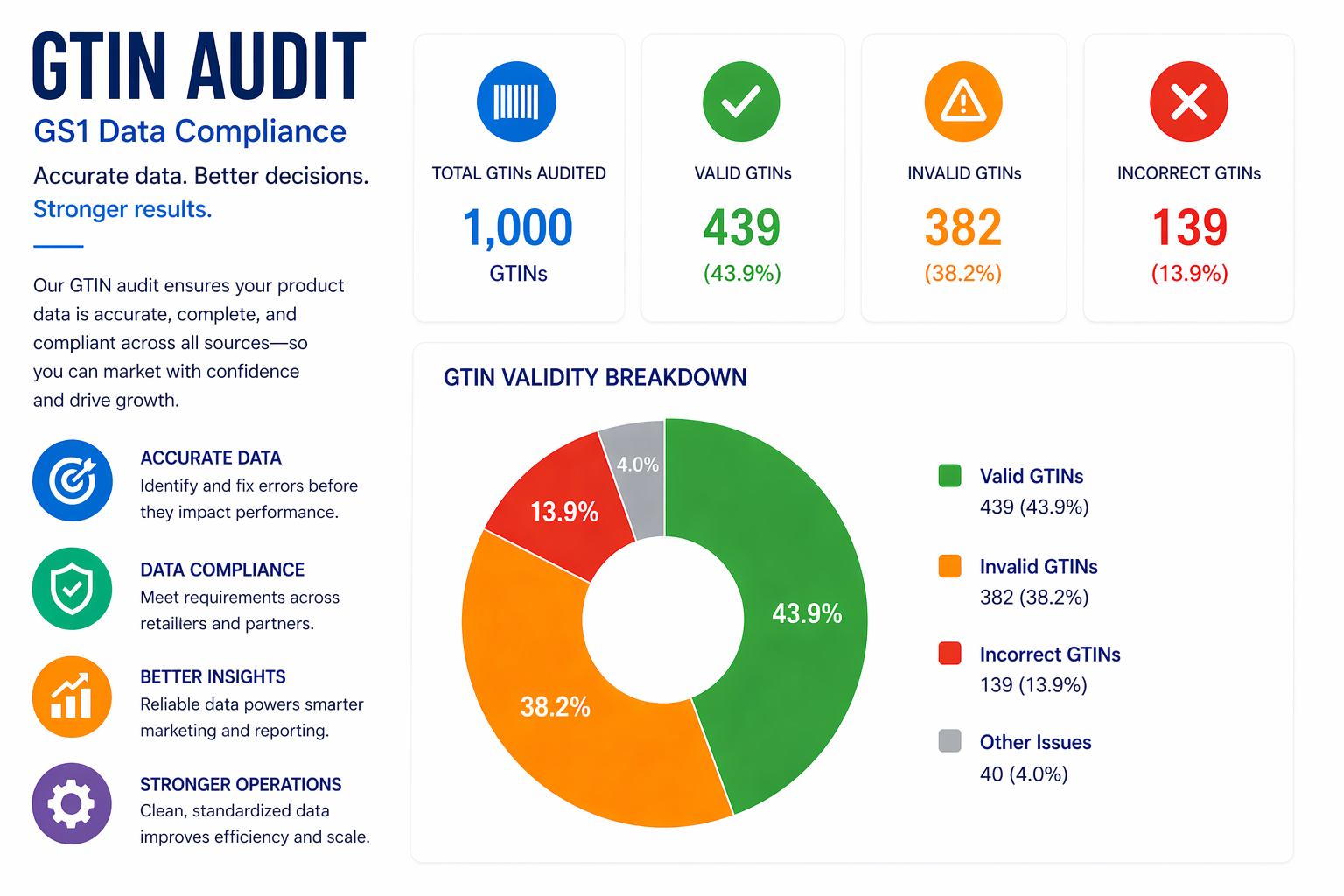
Before any technology decision is made, the most productive first step for most brands is a thorough GTIN Audit of their current product portfolio. This means:
– Identifying every SKU that currently carries a 1D barcode intended for retail POS scanning
– Confirming that each GTIN is correctly structured, properly encoded, and actively registered in GS1 databases
– Verifying that product descriptions, brand names, and key attributes in GS1 databases match what is on the physical packaging
– Flagging any GTINs with existing print quality or verification issues before they carry over into new 2D implementations
This is precisely where Bar Code Graphics’ established GS1 barcode support service provides immediate value. With tens of millions of barcodes verified across virtually every retail and consumer goods category, our team uncovers hidden GTIN problems — incorrect check digits, missing leading zeros, improperly applied Application Identifiers — that consistently derail Digital Link projects. Module 3 of our GS1 Digital Link Mastery course dedicates an entire step to the packaging audit process for this reason: what you don’t know about your current barcode portfolio will postpone your company’s integration of the 2D GS1 Digital Link barcode.
The Critical Bottleneck: Data Preparation
Brands that have completed their GTIN Audit consistently run into the same wall: their product data is incomplete, inconsistent across systems, or stored in formats that can’t be served efficiently via a web API. Supplier data collection takes weeks or months to compile the information that makes Digital Link valuable to users before a single code reaches retail shelves.
Starting this data remediation process early and using structured collection workflows, smooths the implementation timeline.
Technology and Resolver Infrastructure
Once product data is in order, brands need to make deliberate choices about their resolver — the system that receives every scan and routes it to the right destination. Module 2 of our GS1 Digital Link Mastery course covers this architecture in depth, it’s the traffic director for the entire Digital Link ecosystem and there are options of resolvers for your company. The resolver decision has long-term implications, which are discussed in our **GS1 Digital Link Mastery** course.
Pre-Deployment Testing Is Non-Negotiable
This is where many Digital Link implementations fail — and where the cost of skipping steps becomes starkly visible. Module 4 of the GS1 Digital Link Mastery course frames testing as the most critical step in the entire implementation, and the numbers support that framing: a single packaging recall due to codes that fail in retail can easily exceed $75,000 in reprint costs alone, to say nothing of the retailer trust damage.
Proper pre-deployment testing covers five pillars: GS1 standards compliance verification, retail POS compatibility testing, serialization and product identification validation, print quality assessment, and user experience validation across iOS and Android devices. Codes that look perfect on screen can fail on curved surfaces or with older scanner hardware. Professional third-party verification — using calibrated equipment and GS1-compliant grading standards — is the only reliable way to confirm that codes work in real-world conditions before product is mass produced and ships.
Launch Smart, Then Monitor and Optimize
A staged rollout is consistently more effective than attempting a full portfolio switch. Module 5 of the GS1 Digital Link Mastery course outlines a structured approach involving validating technically, confirming retail compatibility, establishing baseline performance data, then scaling with the knowledge gained.
Once live, Digital Link is not a set-and-forget system as multiple components of the system all require active monitoring. GS1 standards will continue to evolve, retailer requirements shift, and the brands that build ongoing compliance review into their operational cadence will be best positioned to adapt.
A Foundation for What Comes Next
There is one more reason to treat Sunrise 2027 compliance as a strategic investment rather than a compliance checkbox: every brand that properly implements GS1 Digital Link has simultaneously laid the infrastructure foundation for Digital Product Passport (DPP) compliance under the EU’s Ecodesign for Sustainable Products Regulation. The resolver, the structured data, the product identifiers — it all transfers. The work done today serves multiple regulatory and commercial objectives well into the next decade.
Where to Begin

If your team hasn’t yet conducted a GTIN Audit, that is the practical starting point — understanding exactly what you have, what needs to be corrected, and what data gaps exist before any resolver or packaging decisions are made. Bar Code Graphics has supported that process for brands across every major retail category, and our **GS1 Digital Link Mastery** course provides the end-to-end framework: from understanding what Digital Link actually is (Module 1), to technical fundamentals (Module 2), implementation planning (Module 3), testing and QA (Module 4), and launch and optimization (Module 5).
The 2027 deadline is approaching. The brands that start with a clear audit of where they stand today will be the ones that reach compliance on schedule — and capture the full strategic value of what GS1 Digital Link makes possible.
Bar Code Graphics is a US barcode authority with decades of experience in GS1 barcode support, print quality verification, and Digital Link implementation services. Learn more about our GS1 Digital Link Mastery course and GTIN Audit service.






Comments are closed.